The Moho
The race to drill into the mantle
Under the oceans the mantle lies only a few kilometers below the sea floor. Reaching it has defeated three generations of engineers, and the attempt started before anyone had walked on the Moon.
Why the sea floor is the short cut
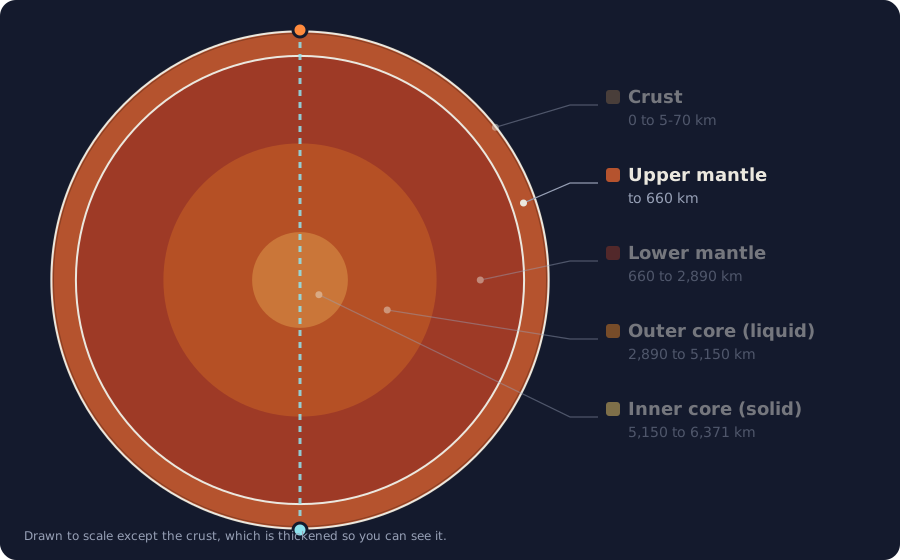
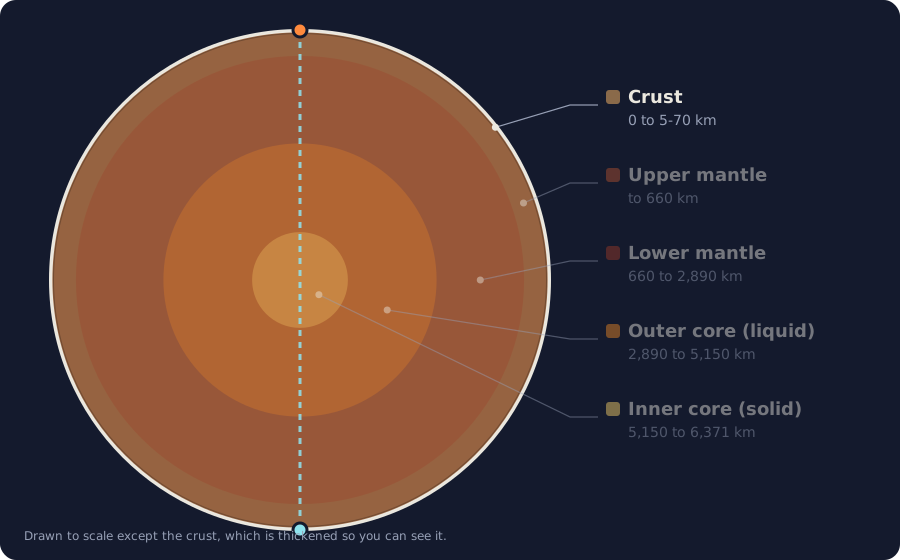
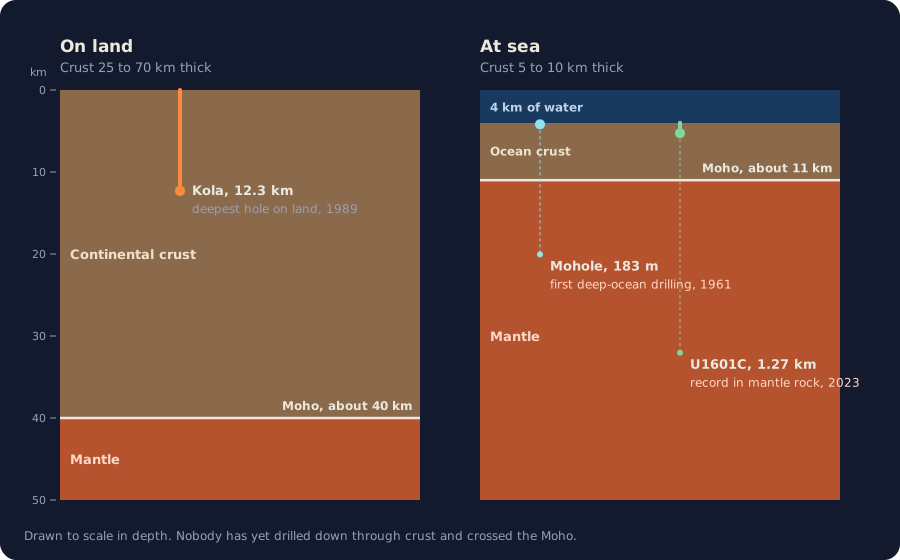
Under the continents the crust is 25 to 70 km thick, which is why the Kola borehole gave up at 12.3 km without coming close. Under the oceans the crust is only 5 to 10 km thick. If you want to reach the Moho, the sharp boundary where the crust ends and the mantle begins, the sea floor is the obvious place to try. The catch is that you first have to hold a drill ship steady over several kilometers of open water.
Project Mohole, 1961
The first attempt was gloriously ambitious. In March and April 1961 the drill ship CUSS I worked off Guadalupe Island, Mexico, in about 3,600 m of water. It drilled five holes, the deepest reaching 183 m below the sea floor. That is a rounding error next to the Moho, but the point was the technique: it proved a floating ship could be held in place and drill the deep ocean at all. Every scientific ocean drilling expedition since rests on it.
The project itself did not survive. Costs climbed, the choice of contractor became a political fight, and in 1966 Congress cut the funding after about 57 million dollars had been spent. The Moho was left alone.
Coming at the mantle from the side
There is a second way in. In a few places on the sea floor, huge faults have dragged mantle rock up until it sits almost at the surface, with the crust peeled off it. One of them is the Atlantis Massif on the Mid-Atlantic Ridge, next to the Lost City hydrothermal field.
In 2023 the JOIDES Resolution drilled there on IODP Expedition 399 and went 1,267.8 m into it, bringing up serpentinized peridotite with 71% recovery, and over 90% in places. The previous record for a hole in this kind of rock was 201 m, set in 1993. It is the longest section of mantle rock anyone has ever held.
It is worth being precise about what this is and is not. The drill did not pass down through normal ocean crust and cross the Moho. It sampled mantle rock that tectonics had already carried close to the sea floor. The original goal, a hole that starts in crust and ends in the mantle, is still unclaimed after more than sixty years.
What the rock is for
Mantle rock reaches the surface in other ways, in lava and in fragments carried up by volcanoes, but those samples are altered on the journey. A long, continuous core taken in place is different: it records how the rock changes with depth, how sea water seeps in and turns it to serpentine, and how that reaction releases hydrogen and feeds microbes living in the rock. Lost City exists because of it.
How far anyone has got
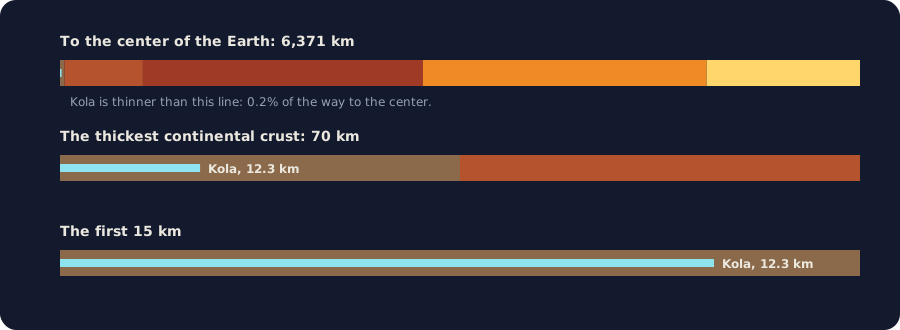
- Deepest hole on land: 12,262 m, Kola, 1989. About a third of the way through continental crust.
- Project Mohole, 1961: 183 m below the sea floor, in 3,600 m of water.
- Deepest hole in mantle rock: 1,267.8 m, Atlantis Massif, 2023.
- Distance to the center of the Earth: 6,371 km. The record is 0.2% of the way.