You dig here
You come out here
Or click the globe. Drag to spin it.
Depth0 km
LayerSurface
Temperature15 °C
Free fall0 min
Pick a place, use your location or click anywhere on the globe, then dig straight through the center of the Earth. See what you pass through and where you come out.
Or click the globe. Drag to spin it.
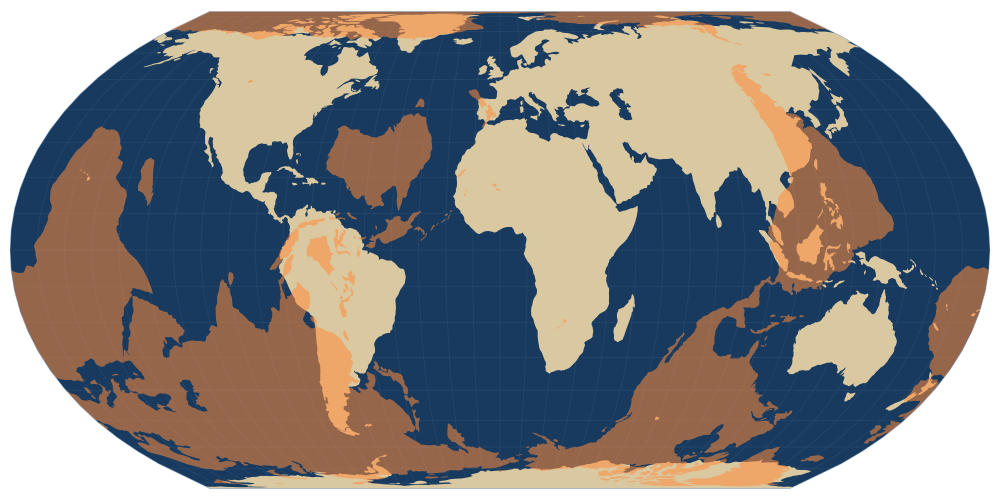
No. The point directly opposite the United States is the southern Indian Ocean, southwest of Australia. From New York you'd surface about 1,000 km off the Australian coast. To come out in China you would need to start digging in Argentina or Chile.
Your antipode is the point on the exact opposite side of the Earth. Flip the latitude from north to south (or the other way round) and move the longitude by 180 degrees. A straight line between the two points passes through the center of the planet.
Only in a few places. About 15% of the world's land has land on the opposite side, which is less than 5% of the Earth's surface. The best-known pairs are Spain and New Zealand, Argentina and China, and parts of Chile and China or Mongolia. See the map.
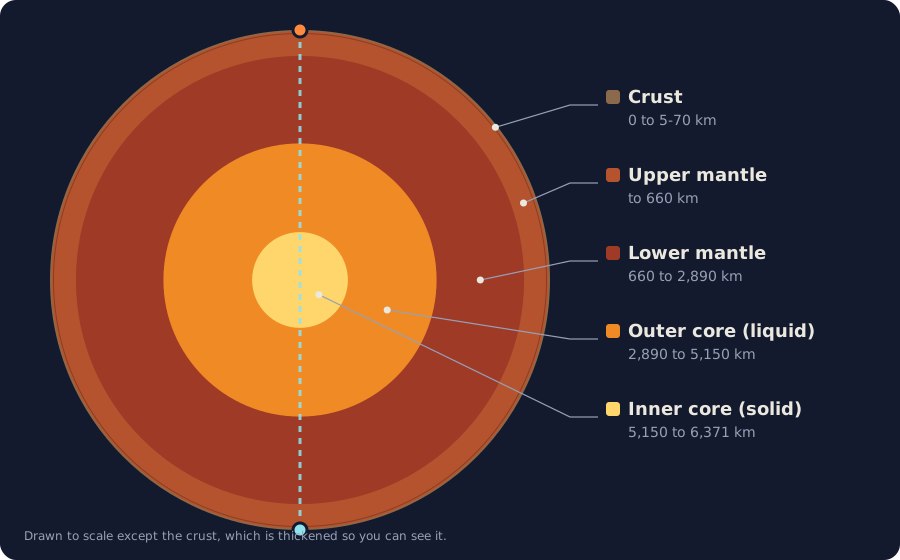
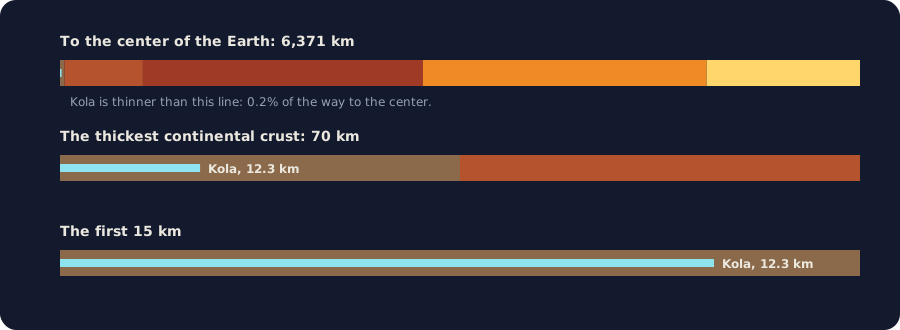
First the crust, 5 to 70 km thick. Then the rocky mantle down to 2,890 km, the liquid iron outer core down to 5,150 km, and the solid inner core at the center. Temperatures climb to around 5,400 °C in the middle. Read about each layer.
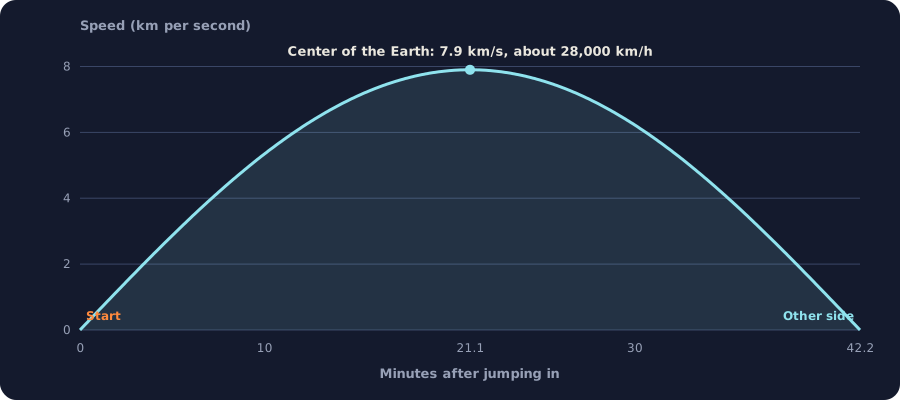
About 42 minutes in the classic textbook model, or about 38 minutes once you account for the Earth's dense iron core, assuming no air and ignoring the heat. You'd speed up all the way to the center, reaching about 8 km per second, then slow down and stop exactly at the surface on the other side. More on the gravity train.