Layer 2 of 4
The mantle: solid rock that flows
The mantle is the biggest part of the Earth and the engine behind almost everything that shapes its surface. And it is solid rock that moves like very, very slow syrup.
The biggest layer
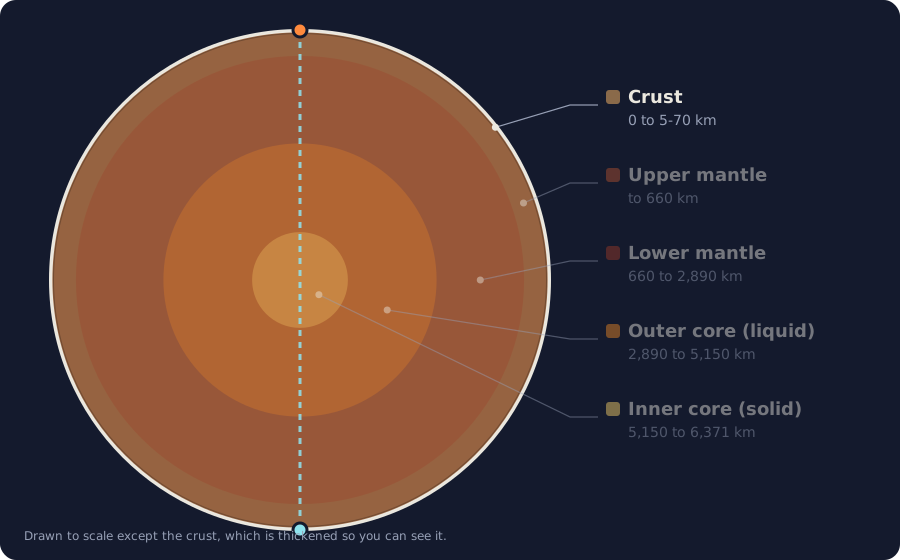
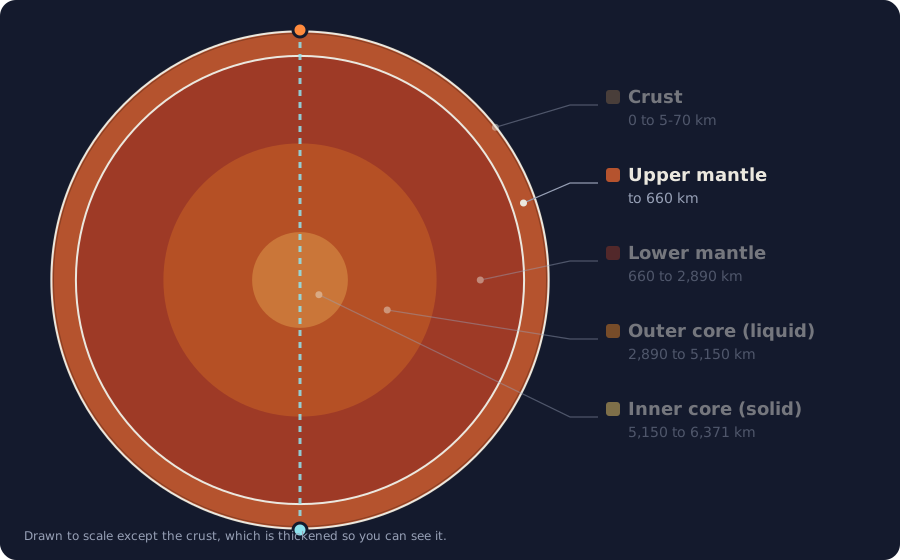
The mantle is about 2,900 km thick. It holds roughly 84% of the Earth's volume and two thirds of its mass. If you dig straight through the planet, you spend more than 5,700 km of the 12,742 km trip in mantle rock, once on the way down and once on the way up.
Made of peridotite
The upper mantle is mostly peridotite, a dense green rock full of the mineral olivine. You can hold pieces of it: volcanoes sometimes carry chunks up to the surface, and in 2023 a drilling ship recovered 886 meters of mantle rock from the floor of the Atlantic Ocean, where the mantle comes unusually close to the surface. Deeper down, pressure rearranges the same atoms into denser crystals such as wadsleyite, ringwoodite and bridgmanite. Bridgmanite, found in the lower mantle, is probably the most common mineral on Earth, even though almost nobody has seen it.
Three zones
- Upper mantle, from the Moho to 410 km. Its top part is welded to the crust and together they form the tectonic plates.
- Transition zone, 410 to 660 km. Its minerals can hold water inside their crystals, possibly more than all the oceans combined.
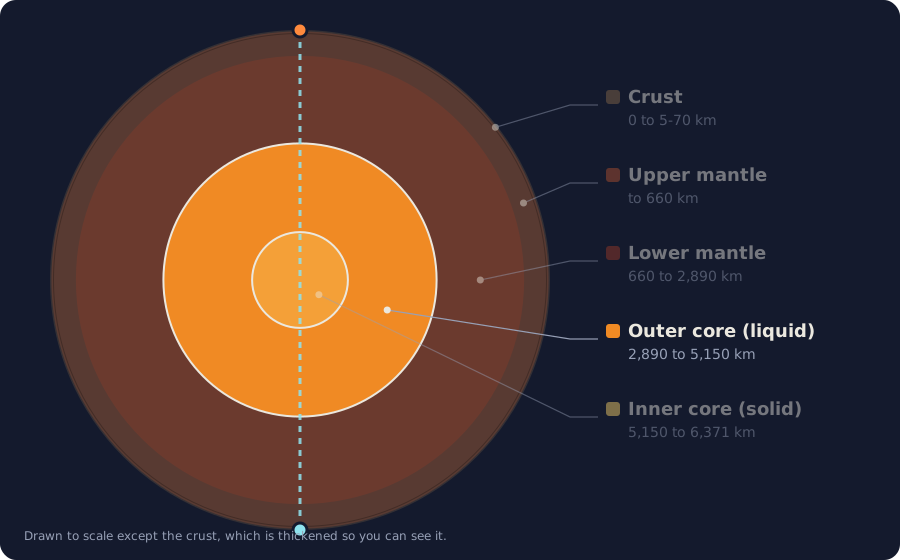
- Lower mantle, 660 to 2,890 km. The hottest, densest and least understood part, ending at the boundary with the liquid core.
Solid, yet it flows
Mantle temperatures range from a few hundred degrees near the top to about 3,900 °C at the bottom. That is hot enough to melt the rock at the surface, but the pressure keeps it almost entirely solid. Over millions of years, though, solid rock can creep. Hot material rises, cooler material sinks, and the mantle circulates in slow convection currents moving a few centimeters a year, about as fast as your fingernails grow.
That slow churning drags the tectonic plates around. It opens oceans, pushes up mountains and causes most earthquakes and volcanoes. The ground beneath you is moving right now, on top of a layer you will never see.
Where the magma comes from
The mantle is not a sea of lava. Magma forms only in special places: where plates pull apart and pressure drops, where a sinking plate carries water down and lowers the melting point, and above hot plumes such as the one feeding Hawaii. Even there, only a few percent of the rock melts.