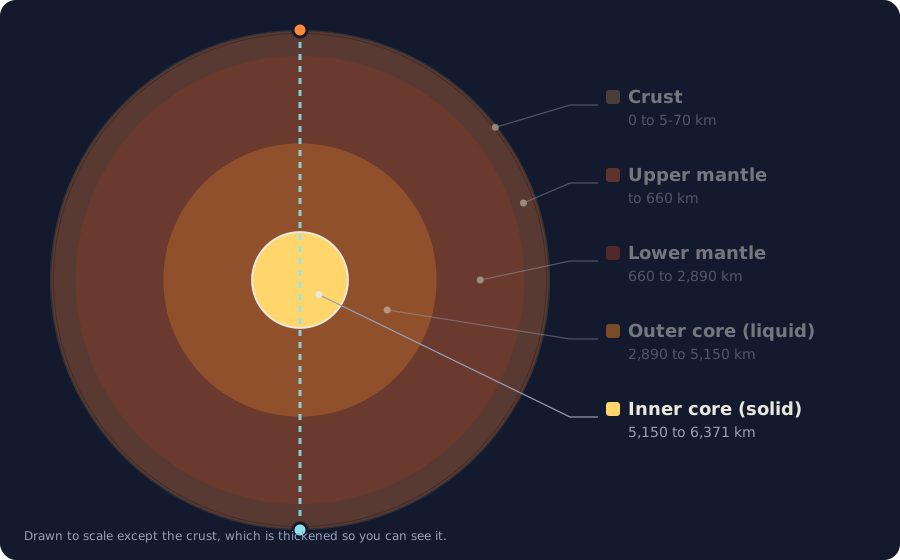
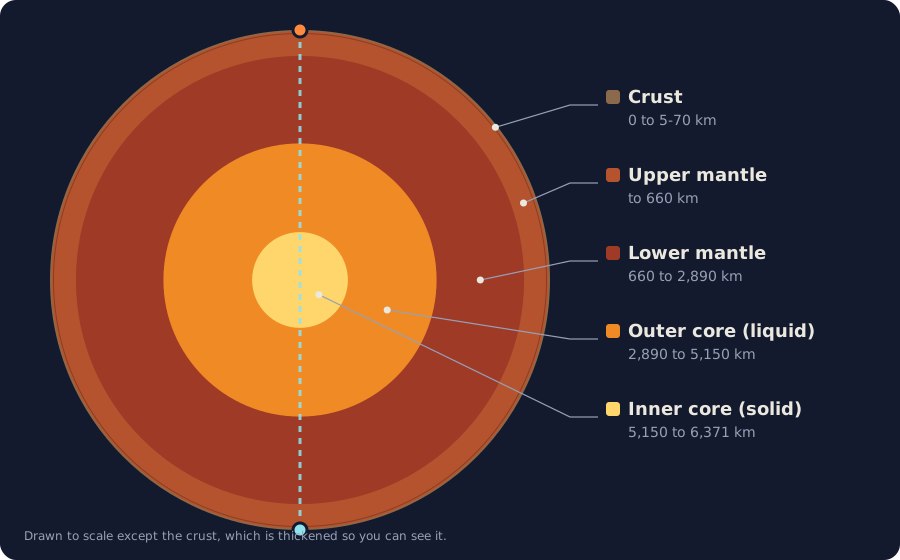
Layer 3 of 4
The outer core: a liquid metal ocean
Halfway through your tunnel the rock ends and you hit liquid metal. The outer core is an ocean of molten iron, and its currents generate the magnetic field that shields the planet.
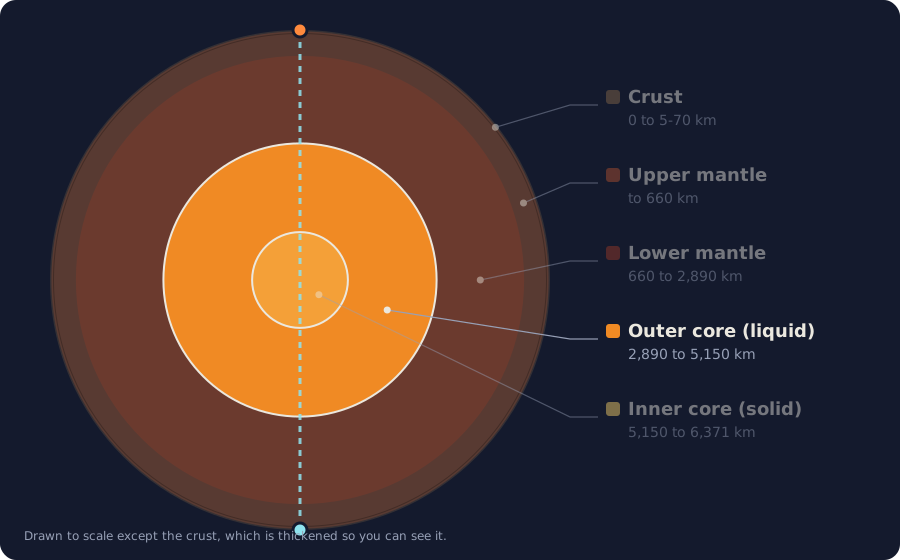
An ocean of iron
The outer core is about 2,260 km thick and made mainly of iron with around 5% nickel, plus smaller amounts of lighter elements such as sulfur, oxygen and silicon. It is liquid, and a thin one: it flows about as easily as water. Temperatures run from roughly 3,000 to 4,000 °C at the top to about 5,400 °C at the bottom.
How we know it is liquid
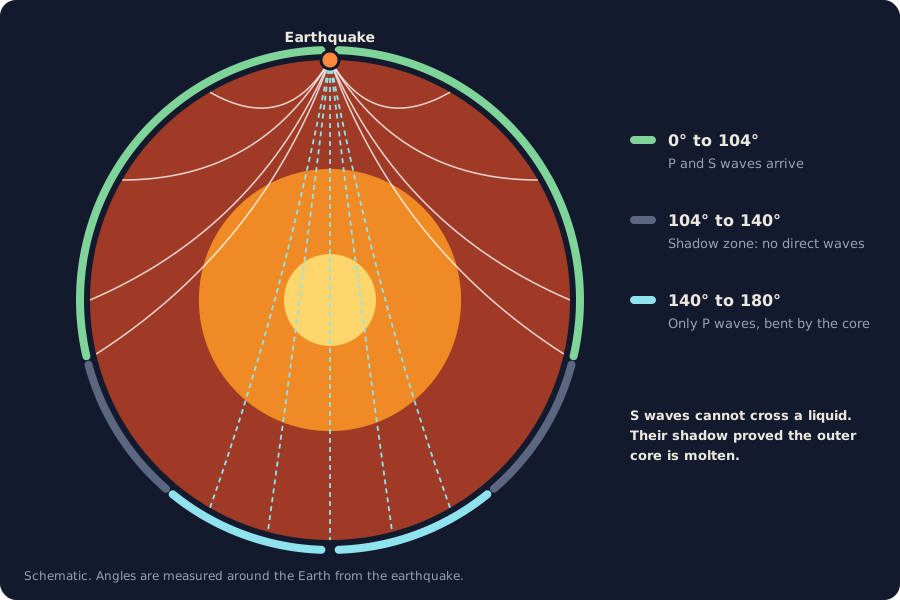
Earthquakes send out two main kinds of waves. P waves squeeze and stretch rock, and they can pass through anything. S waves shake it from side to side, and they cannot travel through a liquid. When seismologists compared recordings from around the world, they found a huge region on the far side of every big earthquake where S waves never arrive. The only explanation is a liquid layer in the middle of the planet. In 1913 Beno Gutenberg calculated that its top lies about 2,900 km down, remarkably close to today's value.
Read the full story of how earthquake waves revealed the core.
The engine of Earth's magnetic field
Heat escaping from the core stirs the liquid iron. Because the Earth spins, the flow twists into spirals, and moving metal in a magnetic field generates electric currents, which in turn sustain the field. This self-running dynamo is called the geodynamo. Inside the outer core the magnetic field is about 50 times stronger than at the surface.
The field reaches far into space and deflects the solar wind, the stream of charged particles from the Sun. Without it the atmosphere would slowly be stripped away, as happened on Mars. Compasses, migrating birds and the northern lights all depend on what happens 3,000 km under your feet.
A field that flips
The geodynamo is not steady. The magnetic poles wander, and every few hundred thousand years the whole field reverses, so a compass would point south. The last full reversal happened about 780,000 years ago. Rocks on the sea floor record these flips as stripes of alternating magnetism, which became key evidence for plate tectonics.